28 May 2025 | 2 - 3 MIN read
Are you making these costly financial mistakes?
Share this


Let’s play a quick game.>
Think back to last Tuesday.
What did you eat for dinner?
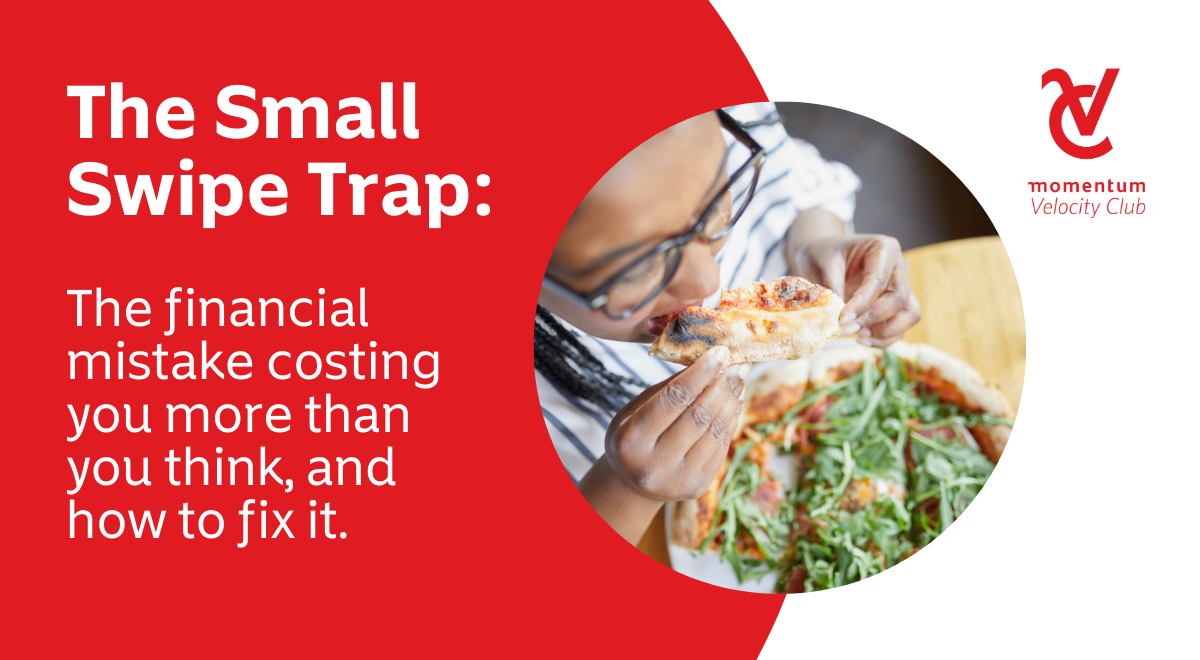
Can’t remember? That’s okay, most of us can’t. But here’s the twist: that tiny purchase might still be costing you, not just in rands, but in stress.
This is what we call The Small Swipe Trap.
It’s not the big splurges that sink us, it’s the quiet, everyday swipes. The ones we forget before we’ve even finished paying them off. In this blog, we’re unpacking how these seemingly harmless habits build up, how they silently keep us stuck in debt, and what you can do to stop the cycle.
The invisible debt trap #1: Small purchases, long tails
This is what we call unconscious debt. It’s not a big purchase you’ve planned for — like a car, or a study loan. It’s the quiet, forgettable swipes. The ones that feel harmless. But here’s the thing: credit is not free. And small swipes have a long tail.
Over time, those small amounts accumulate interest. That R120.00 lunch? If you’re only making minimum payments, you could still be paying for that meal 6 months down the line.
We often hear people say “I don’t know where my money goes” and this is where. Into silent interest repayments, often on things that were never meant to last.
Invisible debt trap #2: Subscription creep
A gym App. Two streaming services. That R89.00-a-month beauty box. They don’t feel like debt, but if they’re on a credit card, they are.
Many of us sign up for subscriptions on autopilot and forget they exist. Then we pay interest on them for months. Maybe even years.
The solution?
- Do a quick audit of all your monthly debit and credit card deductions.
- Cancel anything you haven’t used in 60 days.
- If you can, move subscriptions onto debit orders (not credit) to avoid interest stacking up.
Invisible debt trap #3: The minimum payment mindset
Making the minimum payment on your credit card feels responsible, but it’s not enough. In fact, banks love it when you only pay the minimum. Why? Because it maximises how much interest they can charge you over time.
If your minimum payment is R300.00 but your balance is R2 500.00, you could be in debt for over a year - on one purchase.
The fix?
- Always aim to pay more than the minimum — even just a few hundred rand more.
- Set reminders to pay on time so interest doesn’t snowball.
- Avoid using credit for things that won’t hold value past the next week.

Invisible debt trap #4: The month-end swipe cycle
It’s the 26th. Groceries are running low. Airtime’s gone. And your bank balance is gasping. So you swipe. You make it through. You think: “I’ll pay it back when I get paid.”
But here’s the trap: when your salary hits, the credit repayments eat into it immediately. So, you swipe again at the end of the next month. And the cycle continues.
The solution?
- Start a mini “month-end fund” – even R100.00 a week can help.
- Avoid using credit for food or petrol — try using cash or debit where possible.
- Track what you swipe after the 25th — and notice your patterns.
So… what’s really going on?
Here’s the truth: most of us are not bad with money. We’re just busy. We’re distracted. We’re keeping up with expectations ~ our own, our peers’, our families’. And we’re tired. So, we swipe. We scroll. We order. We pay later.
But understanding your own patterns is the first step to shifting them.
What you can do this week.
Here’s 5 small actions that can make a big difference:
1. Track your ‘invisible’ swipes
For one week, note every time you swipe for under R250.00. Just becoming aware will change how you spend.
2. Add a “cool-off” rule
If you’re using credit for anything that will be gone in 24 hours (like food, drinks, or impulse buys), pause and ask: Would I still buy this if I had to pay double?
3. Reassign your raise
If your income increased recently, great! Now decide: what do I want this raise to change in my life? Let part of it go towards saving, investing or settling debt, before your lifestyle absorbs all of it.
4. Check your credit card statement for patterns
Are there recurring purchases you could replace, reduce or reframe? (We KNOW some of you will be surprised…).
5. Build a “mini-buffer” fund
Even R500.00 a month into a separate account can help reduce the pressure to swipe when the end of the month hits. It’s like an emergency fund for your Uber Eats habit.
You don’t need to get it perfect, but you do need to be aware
The real cost of unconscious spending isn’t just financial, it’s emotional too. It’s the anxiety. The mental load. The “I thought I’d be further by now” feeling.
You’re not behind. You’re not failing.
But you do deserve better habits — and the freedom they create.
Start with noticing, then take 1 small step, repeat
Have you signed up to our mailing list? Sign up now and receive exclusive insights delivered to your inbox twice a month.
Follow our socials
24 April 2025 | 3 - 5 MIN read
Start building real financial literacy today
20 MARCH 2025 | 8 - 10 MIN read
Not all debt is created equal—are you using it wisely?
28 FEBRUARY 2025 | 10 - 12 MIN read